"Go on-Take my hand,
Not my picture…"
I suppose he would have wanted us to just look away, go about our business like any other day and pretend he wasn't there in the first place.
For the title of this piece I suppose he would have called me a clichéd little dumb-shit, and told me to fuck off.
But the past few days have proven that, despite his enduring wishes for privacy(the ones he fought for armed with verbal venom and threat of legal action) it has been just as impossible for us to leave well enough alone in death as it was during J.D. Salinger's life.
His wasn't a unique request, but one we have all made from time to time to our friends, husbands, wives and receptionists alike:
"Remember now, if THEY come calling, I'M NOT HERE."
What could sour a man's taste for success and curtail his grand ambition for literary gravitas so much as to take him from that cocky nineteen-year-old for whom an NYU curriculum was a waste of time; that young writer who then stood brazenly at the doors of the New Yorker demanding entry like Achilles at the walls of Troy; a mind and a talent too great to waste on the family business that fed, clothed and awarded him an upper-class living in New York; from prophesying his own status as a great novelist, the catalyst for the next phase of American literature; a handsome man with dark features and forlorn eyes, a literary Humphrey Bogart who had no trouble drawing the stares of beautiful women and blending in with New York's upper crust; An overnight ascension up the publishing world's A-list; to an introverted societal expat in rural Cornish, New Hampshire, where beyond occasional niceties towards neighbors, he refused to share anything more of himself with the world.
…
Salinger was, to my mind and probably many others, the founder of the postmodern "New York" novel. Literary critic James Wood once said of that proposed genre:
"...And besides, the "New York novel" - as opposed to the novel set in New York - is a genre of no importance at all."
But New York was clearly more than just a backdrop for Salinger's novels and stories. He was the voice of upper class disillusionment, a torch he unanimously inherited from F. Scott Fitzgerald, who abdicated his seat, joining other east coast writers as they drank themselves into debt and made their ill-fated exodus out west to a land of sunshine, orange groves and statutes on drinking water--the land of that pubescent and promising new media goddess, Hollywood.
Ernest Hemingway once described Fitzgerald as a 'whore' for career moves like this. A term Holden Caulfield uses to describe his brother D.B. in The Catcher in the Rye, who also writes for film...
(F. Scott = D.B.?)
In "The Great Gatsby", Nick Carraway graduates from the insular familiarity of his Ivy League world into the corrupt world of bootlegging and 1920's opulence-the world of Jay Gatsby.
Fitzgerald's New York reflected the 1920's, the prosperity following the Great War just before the jugulating grip of the Great Depression; Olympus before the fall, the last fleeting snapshot of America's socialite aristocracy. At the time events in The Great Gatsby play out, there was a slow but steady socio-economic restructuring that gave birth to the American middle class. Salinger's work traced those changes-the canvas, New York City.
If men like Thaw, Rockefeller, Carnegie, and Vanderbilt had previously been royalty, with the Roosevelts, Kennedys and Arnold Rothsteins the nobility, then burgeoning families like the Caulfields and the Glass' represented the new 'gentry', the earls and viscounts of New York: affluent though not rich, people of note but not newspaper-worthy, all set against one another, vying for advancement at the king's court.
Holden Caulfield is a progeny of those gentry: talented, directionless and bored out of his mind.
So what was it about one spoiled and, lets face it, often whiny prep-school kid and his inability to count his blessings like the rest of the trust-fund brigade? Why have so many with each passing generation, myself included, felt so much resonance with the narrative of Holden Caulfield?
After Salinger’s death, a blog on the New York Times website posted collected thoughts and reflections about the man and his work. One Leslie from England had THIS to say:
“Catcher in the Rye” was about a self-absorbed, privileged, ungrateful little snot and the two-dimensional female stand-in of a character. The only thing more depressing than that book is the fact that it apparently resonates with most of America. This is telling."
If Salinger's Holden Caulfield is a self-absorbed, ungrateful little snot, and if those tenets are so telling, what words would Leslie use to describe Joyce's Steven Dedalus...
The synthesis of 'Catcher', its spiritual parentage, predates even Fitzgerald. Holden Caulfield's misadventure through New York on his way home from Pencey Prep parallels the odyssey of Stephen Dedalus as he walks the jaded, idealistic artist through the streets of Dublin in James Joyce's Ulysses.
Stephen, much like Holden also finds himself estranged from his parents, especially his father, a well to do gentleman. He has trouble keeping a "real" job, much the same way Holden has trouble staying in school.
Stephen converses, or is coerced into social interaction with schoolmasters and newspaper editors, authoritative figures with whom he is deeply resentful and whose shallow worldview disgusts him. Like Holden, he has no practical use for religion, expressing distaste for the repressing, censoring effect of Catholicism on his native Ireland. He shares, at least at the start of his journey, a living space with a boisterous ignorant slob. Over the course of a day Stephen too finds himself stumbling drunk into the street, in an embarrassing failed attempt at soliciting a prostitute, and in literal tears later on.
Stephen has Leopold Bloom, (technically the titular 'Ulysses' of Joyce's epic) an older, more experienced and perhaps more practical man who has also dealt with the low ways of the world to catch him when he is at his lowest emotional ebb.
Though their encounter ends a bit abruptly, Holden in turn has Mr. Antolini, a teacher, whom he turns to for a much needed ear, and sound wisdom.
When the 16 year old Holden states that he'd like to use all of his 'dough' and move someplace far away to get away from the ignorance of people and their inane conversations, that he may for once be given the chance to be true to himself and see himself in that strange context he finds so personally fitting, it echoes, though maybe less eloquently, Stephen Dedalus's famous proclamation at the end of Joyce's 'Portrait of the Artist as a Young Man':
"I will tell you what I will do and what I will not do. I will not serve that in which I no longer believe whether it call itself my home, my fatherland or my church: and I will try to express myself in some mode of life or art as freely as I can and as wholly as I can, using for my defense the only arms I allow myself to use, silence, exile, and cunning."
Dedalus is a paragon of artistic integrity then? Lauded as the young man who refuses to accept his birthright, and instead makes his own way according to his own set of values.
And Holden is just a whiny, spoiled brat
...
Flashing forward this time, about sixty years...
Jay McInerney's 1984 novel "Bright Lights, Big City" follows an unnamed character (a WRITER, go figure, who yearns to see his work grace the pages of the NEW YORKER, for whom he is employed as a stressed out fact-checker) seeking escape in the vapid excess of New York's 1980's party scene. He, like Holden Caulfield, possesses a cynical worldview and partial detachment from reality, all the right ingredients for an unreliable narrative. The young man's wife has left him, a reality he is unable to cope with. His nocturnal exodus leads him around Manhattan to all the places she would go, believing she will return to him. As he suffers severe burn-out, the young man then struggles to liberate himself from this hedonistic undercurrent before he suffocates.
Tack on about 5-10 years, subtract his youthful naivety and squeamishness, and lose him in gaudy nightclubs, the cocaine mist of upper west-side bathrooms, larger quantities of booze, sex and other such inherent yuppie vices, and McInerney's novel very well could be a continuation for Holden.
What these characters, and in the end Salinger himself have in common is that they are all "new money", each one marking the birth and evolution of the middle and upper-middle class (of which is slowly disappearing from the American landscape), and no place better is it played than the avenues and neighborhoods of America's foremost metropolitan epicenter. They are each distrustful of something; institutions that set dogmatic artistic standards, and paper-thin societal norms. Though part of an (ever-changing) infrastructure and lifestyle that kept them financially safe and secure, they shun their birthrights. They are sickened by artifice, and have felt the effects of materialism and egotism on their life and work. They all possess a chronic allergy to bullshit, and to have stayed where they were risked a fatal case of anaphylactic shock.
An affliction JD Salinger knew was just part of life in the big city.
Tuesday, February 2, 2010

Here's to YOU, Mr. Salinger (Part Two)
The synthesis of 'Catcher', its spiritual parentage, predates even Fitzgerald. Holden Caulfield's misadventure through New York on his way home from Pencey Prep parallels the odyssey of Stephen Dedalus as he walks the jaded, idealistic artist through the streets of Dublin in James Joyce's Ulysses.
Stephen, much like Holden also finds himself estranged from his parents, especially his father, a well to do gentleman. He has trouble keeping a "real" job, much the same way Holden has trouble staying in school.
Stephen converses, or is coerced into social interaction with schoolmasters and newspaper editors, authoritative figures with whom he is deeply resentful and whose shallow worldview disgusts him. He shares, at least at the start of his journey, a living space with a boisterous ignorant slob. Over the course of a day Stephen too finds himself stumbling drunk into the street, in an embarrassing failed attempt at soliciting a prostitute, and in literal tears later on.
Stephen has Leopold Bloom, (technically the titular 'Ulysses' of Joyce's epic) an older, more experienced and perhaps more practical man who has also dealt with the low ways of the world to catch him when he is at his lowest emotional ebb.
Though their encounter ends a bit abruptly, Holden in turn has Mr. Antolini, a teacher, whom he turns to for a much needed ear, and sound wisdom.
When the 16 year old Holden states that he'd like to use all of his 'dough' and move someplace far away to get away from the ignorance of people and their inane conversations, that he may for once be given the chance to be true to himself and see himself in that strange context he finds so personally fitting, it echoes, though maybe less eloquently, Stephen Dedalus's famous proclamation at the end of Joyce's 'Portrait of the Artist as a Young Man':
"I will tell you what I will do and what I will not do. I will not serve that in which I no longer believe whether it call itself my home, my fatherland or my church: and I will try to express myself in some mode of life or art as freely as I can and as wholly as I can, using for my defense the only arms I allow myself to use, silence, exile, and cunning."
Dedalus is a paragon of artistic integrity then? Lauded as the young man who refuses to accept his birthright, and instead makes his own way according to his own set of values.
And Holden is just a whiny, spoiled brat
...
Flashing forward this time, about sixty years...
Jay McInerney's 1984 novel "Bright Lights, Big City" follows an unnamed character (a WRITER, go figure, who yearns to see his work grace the pages of the NEW YORKER, for whom he is employed as a stressed out fact-checker) seeking escape in the vapid excess of New York's 1980's party scene. He, like Holden Caulfield, possesses a cynical worldview and partial detachment from reality, all the right ingredients for an unreliable narrative. The young man's wife has left him, a reality he is unable to cope with. His nocturnal exodus leads him around Manhattan to all the places she would go, believing she will return to him. As he suffers severe burn-out, the young man then struggles to liberate himself from this hedonistic undercurrent before he suffocates.
Tack on about 5-10 years, subtract his youthful naivety and squeamishness, and lose him in gaudy nightclubs, the cocaine mist of upper west-side bathrooms, larger quantities of booze, sex and other such inherent yuppie vices, and McInerney's novel very well could be a continuation for Holden.
What these characters, and in the end Salinger himself have in common is that they are all "new money", each one marking the stages of the birth and evolution of the middle and upper-middle class (of which is slowly disappearing), and no place better is it played than the avenues and neighborhoods of America's foremost metropolitan epicenter. They are each distrustful of something; institutions that set dogmatic artistic standards, and paper-thin societal norms. Though part of an (ever-changing) infrastructure and lifestyle that kept them financially safe, secure They are sickened by artifice, and have felt the effects of materialism and egotism on their life and work. They all possess a chronic allergy to bullshit, and to have stayed where they were risked a fatal case of anaphylactic shock.
An effect JD Salinger knew was just life in the big city.
Stephen, much like Holden also finds himself estranged from his parents, especially his father, a well to do gentleman. He has trouble keeping a "real" job, much the same way Holden has trouble staying in school.
Stephen converses, or is coerced into social interaction with schoolmasters and newspaper editors, authoritative figures with whom he is deeply resentful and whose shallow worldview disgusts him. He shares, at least at the start of his journey, a living space with a boisterous ignorant slob. Over the course of a day Stephen too finds himself stumbling drunk into the street, in an embarrassing failed attempt at soliciting a prostitute, and in literal tears later on.
Stephen has Leopold Bloom, (technically the titular 'Ulysses' of Joyce's epic) an older, more experienced and perhaps more practical man who has also dealt with the low ways of the world to catch him when he is at his lowest emotional ebb.
Though their encounter ends a bit abruptly, Holden in turn has Mr. Antolini, a teacher, whom he turns to for a much needed ear, and sound wisdom.
When the 16 year old Holden states that he'd like to use all of his 'dough' and move someplace far away to get away from the ignorance of people and their inane conversations, that he may for once be given the chance to be true to himself and see himself in that strange context he finds so personally fitting, it echoes, though maybe less eloquently, Stephen Dedalus's famous proclamation at the end of Joyce's 'Portrait of the Artist as a Young Man':
"I will tell you what I will do and what I will not do. I will not serve that in which I no longer believe whether it call itself my home, my fatherland or my church: and I will try to express myself in some mode of life or art as freely as I can and as wholly as I can, using for my defense the only arms I allow myself to use, silence, exile, and cunning."
Dedalus is a paragon of artistic integrity then? Lauded as the young man who refuses to accept his birthright, and instead makes his own way according to his own set of values.
And Holden is just a whiny, spoiled brat
...
Flashing forward this time, about sixty years...
Jay McInerney's 1984 novel "Bright Lights, Big City" follows an unnamed character (a WRITER, go figure, who yearns to see his work grace the pages of the NEW YORKER, for whom he is employed as a stressed out fact-checker) seeking escape in the vapid excess of New York's 1980's party scene. He, like Holden Caulfield, possesses a cynical worldview and partial detachment from reality, all the right ingredients for an unreliable narrative. The young man's wife has left him, a reality he is unable to cope with. His nocturnal exodus leads him around Manhattan to all the places she would go, believing she will return to him. As he suffers severe burn-out, the young man then struggles to liberate himself from this hedonistic undercurrent before he suffocates.
Tack on about 5-10 years, subtract his youthful naivety and squeamishness, and lose him in gaudy nightclubs, the cocaine mist of upper west-side bathrooms, larger quantities of booze, sex and other such inherent yuppie vices, and McInerney's novel very well could be a continuation for Holden.
What these characters, and in the end Salinger himself have in common is that they are all "new money", each one marking the stages of the birth and evolution of the middle and upper-middle class (of which is slowly disappearing), and no place better is it played than the avenues and neighborhoods of America's foremost metropolitan epicenter. They are each distrustful of something; institutions that set dogmatic artistic standards, and paper-thin societal norms. Though part of an (ever-changing) infrastructure and lifestyle that kept them financially safe, secure They are sickened by artifice, and have felt the effects of materialism and egotism on their life and work. They all possess a chronic allergy to bullshit, and to have stayed where they were risked a fatal case of anaphylactic shock.
An effect JD Salinger knew was just life in the big city.
Monday, February 1, 2010
Here's to YOU, Mr. Salinger (Part One)
"Go on-Take my hand,
Not my picture…"
I suppose he would have wanted us to just look away, go about our business like any other day and pretend he wasn't there in the first place.
For the title of this piece I suppose he would have called me a clichéd little dumb-shit, and told me to fuck off.
But the past few days have proven that, despite his enduring wishes for privacy(the ones he fought for armed with verbal venom and threat of legal action) it has been just as impossible for us to leave well enough alone in death as it was during J.D. Salinger's life.
His wasn't a unique request, but one we have all made from time to time to our friends, husbands, wives and receptionists alike:
"Remember now, if THEY come calling, I'M NOT HERE."
What could sour a man's taste for success and curtail his grand ambition for literary gravitas so much as to take him from that cocky nineteen-year-old for whom an NYU curriculum was a waste of time; that young writer who then stood brazenly at the doors of the New Yorker demanding entry like Achilles at the walls of Troy; a mind and a talent too great to waste on the family business that fed, clothed him and awarded him an upper-class living in New York; from prophesying his own status as a great novelist, the catalyst for the next phase of American literature; a handsome man with dark features and forlorn eyes, a literary Humphrey Bogart who had no trouble drawing the stares of beautiful women and blending in with New York's upper crust; An overnight ascension up the publishing world's A-list; to an introverted societal expat in rural Cornish, New Hampshire, where beyond occasional niceties towards neighbors, he refused to share anything more of himself with the world.
…
Salinger was, to my mind and probably many others, the founder of the postmodern "New York" novel. Literary critic James Wood once said of that proposed genre:
"...And besides, the "New York novel" - as opposed to the novel set in New York - is a genre of no importance at all."
But New York was clearly more than just a backdrop for Salinger's novels and stories. He was the voice of upper class disillusionment, a torch he unanimously inherited from F. Scott Fitzgerald, who abdicated his seat, joining other east coast writers as they drank themselves into debt and made their ill-fated exodus out west to a land of sunshine, orange groves and statutes on drinking water--the land of that pubescent and promising new media goddess, Hollywood.
Ernest Hemingway once described Fitzgerald as a 'whore' for career moves like this. A term Holden Caulfield uses to describe his brother D.B. in The Catcher in the Rye, who also writes for film...
(F. Scott = D.B.?)
In "The Great Gatsby", Nick Carraway graduates from the insular familiarity of his Ivy League world into the corrupt world of bootlegging and 1920's opulence-the world of Jay Gatsby.
Fitzgerald's New York reflected the 1920's, the prosperity following the Great War just before the jugulating grip of the Great Depression; Olympus before the fall, the last fleeting snapshot of America's socialite aristocracy. At the time The Great Gatsby plays out there was a slow but steady social class restructuring that gave birth to the American middle class. Salinger's work traced those changes. If men like Thaw, Rockefeller, Carnegie, and Vanderbilt had been royalty, with the Roosevelts, Kennedys and Arnold Rothsteins the nobility, then burgeoning families like the Caulfields and the Glass' represented the new 'gentry', the earls and viscounts of New York: affluent though not rich, people of note but not newspaper-worthy, all set against one another, vying for advancement at the king's court.
Holden Caulfield is a progeny of those gentry: talented, directionless and bored out of his mind.
So what was it about one spoiled and, lets face it, often whiny prep-school kid and his inability to count his blessings like the rest of the trust-fund brigade? Why have so many with each passing generation, myself included, resonated so much with the narrative of Holden Caulfield?
After Salinger’s death, a blog on the New York Times website showed collected thoughts and reflections about the man and his work. One Leslie from England had THIS to say:
“Catcher in the Rye” was about a self-absorbed, privileged, ungrateful little snot and the two-dimensional female stand-in of a character. The only thing more depressing than that book is the fact that it apparently resonates with most of America. This is telling."
If Salinger's Holden Caulfield is a self-absorbed, ungrateful little snot, and if those tenets are so telling, what words would Leslie use to describe Joyce's Steven Dedalus...
Not my picture…"
I suppose he would have wanted us to just look away, go about our business like any other day and pretend he wasn't there in the first place.
For the title of this piece I suppose he would have called me a clichéd little dumb-shit, and told me to fuck off.
But the past few days have proven that, despite his enduring wishes for privacy(the ones he fought for armed with verbal venom and threat of legal action) it has been just as impossible for us to leave well enough alone in death as it was during J.D. Salinger's life.
His wasn't a unique request, but one we have all made from time to time to our friends, husbands, wives and receptionists alike:
"Remember now, if THEY come calling, I'M NOT HERE."
What could sour a man's taste for success and curtail his grand ambition for literary gravitas so much as to take him from that cocky nineteen-year-old for whom an NYU curriculum was a waste of time; that young writer who then stood brazenly at the doors of the New Yorker demanding entry like Achilles at the walls of Troy; a mind and a talent too great to waste on the family business that fed, clothed him and awarded him an upper-class living in New York; from prophesying his own status as a great novelist, the catalyst for the next phase of American literature; a handsome man with dark features and forlorn eyes, a literary Humphrey Bogart who had no trouble drawing the stares of beautiful women and blending in with New York's upper crust; An overnight ascension up the publishing world's A-list; to an introverted societal expat in rural Cornish, New Hampshire, where beyond occasional niceties towards neighbors, he refused to share anything more of himself with the world.
…
Salinger was, to my mind and probably many others, the founder of the postmodern "New York" novel. Literary critic James Wood once said of that proposed genre:
"...And besides, the "New York novel" - as opposed to the novel set in New York - is a genre of no importance at all."
But New York was clearly more than just a backdrop for Salinger's novels and stories. He was the voice of upper class disillusionment, a torch he unanimously inherited from F. Scott Fitzgerald, who abdicated his seat, joining other east coast writers as they drank themselves into debt and made their ill-fated exodus out west to a land of sunshine, orange groves and statutes on drinking water--the land of that pubescent and promising new media goddess, Hollywood.
Ernest Hemingway once described Fitzgerald as a 'whore' for career moves like this. A term Holden Caulfield uses to describe his brother D.B. in The Catcher in the Rye, who also writes for film...
(F. Scott = D.B.?)
In "The Great Gatsby", Nick Carraway graduates from the insular familiarity of his Ivy League world into the corrupt world of bootlegging and 1920's opulence-the world of Jay Gatsby.
Fitzgerald's New York reflected the 1920's, the prosperity following the Great War just before the jugulating grip of the Great Depression; Olympus before the fall, the last fleeting snapshot of America's socialite aristocracy. At the time The Great Gatsby plays out there was a slow but steady social class restructuring that gave birth to the American middle class. Salinger's work traced those changes. If men like Thaw, Rockefeller, Carnegie, and Vanderbilt had been royalty, with the Roosevelts, Kennedys and Arnold Rothsteins the nobility, then burgeoning families like the Caulfields and the Glass' represented the new 'gentry', the earls and viscounts of New York: affluent though not rich, people of note but not newspaper-worthy, all set against one another, vying for advancement at the king's court.
Holden Caulfield is a progeny of those gentry: talented, directionless and bored out of his mind.
So what was it about one spoiled and, lets face it, often whiny prep-school kid and his inability to count his blessings like the rest of the trust-fund brigade? Why have so many with each passing generation, myself included, resonated so much with the narrative of Holden Caulfield?
After Salinger’s death, a blog on the New York Times website showed collected thoughts and reflections about the man and his work. One Leslie from England had THIS to say:
“Catcher in the Rye” was about a self-absorbed, privileged, ungrateful little snot and the two-dimensional female stand-in of a character. The only thing more depressing than that book is the fact that it apparently resonates with most of America. This is telling."
If Salinger's Holden Caulfield is a self-absorbed, ungrateful little snot, and if those tenets are so telling, what words would Leslie use to describe Joyce's Steven Dedalus...
Saturday, January 16, 2010
Sleep, Sleep, you're better off dreaming...
My father used to say that one of the worst things in the world, gaining ground on famine and genocide, was wasted potential.
Robert DeNiro admonishes his son in much the same way in the film A Bronx Tale. I like to think, or hope, that my father was saying it long before that movie was released; a pearl of wisdom imparted to him by his father or even better, an adage he carved out for himself when on the cusp of adulthood.
At any rate, DeNiro’s character uses the word talent, instead of my father’s choice of potential, which though less grammatically viable as a noun, clearly delivers more clout when you say it.
Considering the source, my father wasn’t exactly the man to line up in front of for sagely advice.
He was certainly not one to lead by example, either.
Then again, he also used to say that you could learn something from anyone, regardless of their standing in the world, from a teacher all the way down to a bum on the street.
Someone, essentially, knows something you don’t. Ok. Given.
I often wonder about my potential.
There are days when I don’t believe I’m wasting anything, rather, I feel like I am being wasted.
There are days, all too few, when I can believe that all things stitched into reality’s fabric are possible. All avenues seem open, streets run in both directions, the lights are green, all the hidden avenues are revealed, and I become that guy who can navigate every back-road in existence.
There are stretches when I wonder if I’ve actually grown up at all, hopelessly stunted by some cataclysmic event playing a desperate game of catch-up, months, even years behind everyone else.
I’m a giant child making his way around a big city: engulfed in blinding bright lights, dog-paddling in a sea of noise, keeping pace in a herd of other people as we dart across the brick, mortar and metal sage-brush of a concrete jungle teaming with unforgiving, unyielding traffic. Most already know to look both ways, but I constantly learn the hard way, soaked to the bone as large rubber tires kick up rain water and slushy gray snow.
One thing I’ve come to understand is that this world isn’t in the business of giving you what you want. So recoil your hands, un-cup them, and forget about asking. Move away from the cosmic breadline, because there’s not enough charitable karma to go around in this life.
This just isn’t a time for dreaming, nor has it provided an adequate ground to cultivate them. Lately we’ve all been locked in survival mode, trying desperately to get by on what’s around in a landscape that values uniqueness and creative expression less and less.
In the process we’ve have become estranged from one another; set in competition for whatever is left that can propel us out of this shallow, two-dimensional entropy that threatens to assimilate us and into self-actualized autonomy, and the lives we desire…
... ...
The Steven King novella Langoliers deals with a small group of people on a cross-country flight waking on their airplane to the realization that they are the only ones present. After an emergency landing, they wander a deserted airport. Machinery doesn’t function. There is no electric power. Food tastes spoiled or has no taste to begin with. If I remember correctly, it’s impossible to make a flame; fuel wont burn in this time and space, in fact, a gun won’t even fire. Time it seems has literally frozen.
The passengers come to find out they have somehow become stuck several hours behind the rest of the world in a temporal drain that time has forgotten, living constantly, so to speak, in the past. To top it off, there are these menacing little monsters that look like sinewy flying bear-traps devouring everything in sight, which will include these people if they don’t find some way to get the hell out of there.
Panic ensues, and a few of them go a bit batty. Paranoid, they turn on others in the group. Some have dark secrets they aren’t very proud of—life choices the present situation forces them to confront that they’d sooner alter if only they could, and would like nothing more than to forget. Romantic feelings for others in the group crop up for some, love’s bliss something they had been denied for a long time. A few, or at least one discovers a latent gift in these dire circumstances, but it may be too late…
These people have come to where they are by no real fault of their own. Circumstances just, well, placed them there, sent their plane spiraling through some void while they dreamily slept, their minds occupied with visions of where they are headed, whom they will see and what they will do.
(Or maybe Superman was just in the middle of turning back his latest fuck-up…)
The survivors eventually make it back to the plane, (the fuel currently IN it somehow DOES burn--Can we say Deus ex Machina?) and must take it back through the rift to catch up with the rest of the living world. And they must all FALL back to sleep in order to do it.
One among them has to fly the plane however…
In the cockpit, he lowers the cabin pressure, helping his peers to fall asleep, to put their anxieties and fears aside and just let go, while sacrificing himself…
I, like the passengers in the novel, find myself stuck in a kind of existential layover. It’s difficult to spark anything here, an idea, or a worthwhile thought. Making an attempt is like striking a match on the moon. Nothing. Only faintly aware of what landed me here, all I know is that I have to make it out, but like them too, I don’t readily possess the knowledge or the resources to do so.
Am I wasting my potential?
Is the world wasting me?
Or am I just wasting time?
Will I end up a martyr, left behind?
Robert DeNiro admonishes his son in much the same way in the film A Bronx Tale. I like to think, or hope, that my father was saying it long before that movie was released; a pearl of wisdom imparted to him by his father or even better, an adage he carved out for himself when on the cusp of adulthood.
At any rate, DeNiro’s character uses the word talent, instead of my father’s choice of potential, which though less grammatically viable as a noun, clearly delivers more clout when you say it.
Considering the source, my father wasn’t exactly the man to line up in front of for sagely advice.
He was certainly not one to lead by example, either.
Then again, he also used to say that you could learn something from anyone, regardless of their standing in the world, from a teacher all the way down to a bum on the street.
Someone, essentially, knows something you don’t. Ok. Given.
I often wonder about my potential.
There are days when I don’t believe I’m wasting anything, rather, I feel like I am being wasted.
There are days, all too few, when I can believe that all things stitched into reality’s fabric are possible. All avenues seem open, streets run in both directions, the lights are green, all the hidden avenues are revealed, and I become that guy who can navigate every back-road in existence.
There are stretches when I wonder if I’ve actually grown up at all, hopelessly stunted by some cataclysmic event playing a desperate game of catch-up, months, even years behind everyone else.
I’m a giant child making his way around a big city: engulfed in blinding bright lights, dog-paddling in a sea of noise, keeping pace in a herd of other people as we dart across the brick, mortar and metal sage-brush of a concrete jungle teaming with unforgiving, unyielding traffic. Most already know to look both ways, but I constantly learn the hard way, soaked to the bone as large rubber tires kick up rain water and slushy gray snow.
One thing I’ve come to understand is that this world isn’t in the business of giving you what you want. So recoil your hands, un-cup them, and forget about asking. Move away from the cosmic breadline, because there’s not enough charitable karma to go around in this life.
This just isn’t a time for dreaming, nor has it provided an adequate ground to cultivate them. Lately we’ve all been locked in survival mode, trying desperately to get by on what’s around in a landscape that values uniqueness and creative expression less and less.
In the process we’ve have become estranged from one another; set in competition for whatever is left that can propel us out of this shallow, two-dimensional entropy that threatens to assimilate us and into self-actualized autonomy, and the lives we desire…
... ...
The Steven King novella Langoliers deals with a small group of people on a cross-country flight waking on their airplane to the realization that they are the only ones present. After an emergency landing, they wander a deserted airport. Machinery doesn’t function. There is no electric power. Food tastes spoiled or has no taste to begin with. If I remember correctly, it’s impossible to make a flame; fuel wont burn in this time and space, in fact, a gun won’t even fire. Time it seems has literally frozen.
The passengers come to find out they have somehow become stuck several hours behind the rest of the world in a temporal drain that time has forgotten, living constantly, so to speak, in the past. To top it off, there are these menacing little monsters that look like sinewy flying bear-traps devouring everything in sight, which will include these people if they don’t find some way to get the hell out of there.
Panic ensues, and a few of them go a bit batty. Paranoid, they turn on others in the group. Some have dark secrets they aren’t very proud of—life choices the present situation forces them to confront that they’d sooner alter if only they could, and would like nothing more than to forget. Romantic feelings for others in the group crop up for some, love’s bliss something they had been denied for a long time. A few, or at least one discovers a latent gift in these dire circumstances, but it may be too late…
These people have come to where they are by no real fault of their own. Circumstances just, well, placed them there, sent their plane spiraling through some void while they dreamily slept, their minds occupied with visions of where they are headed, whom they will see and what they will do.
(Or maybe Superman was just in the middle of turning back his latest fuck-up…)
The survivors eventually make it back to the plane, (the fuel currently IN it somehow DOES burn--Can we say Deus ex Machina?) and must take it back through the rift to catch up with the rest of the living world. And they must all FALL back to sleep in order to do it.
One among them has to fly the plane however…
In the cockpit, he lowers the cabin pressure, helping his peers to fall asleep, to put their anxieties and fears aside and just let go, while sacrificing himself…
I, like the passengers in the novel, find myself stuck in a kind of existential layover. It’s difficult to spark anything here, an idea, or a worthwhile thought. Making an attempt is like striking a match on the moon. Nothing. Only faintly aware of what landed me here, all I know is that I have to make it out, but like them too, I don’t readily possess the knowledge or the resources to do so.
Am I wasting my potential?
Is the world wasting me?
Or am I just wasting time?
Will I end up a martyr, left behind?
Wednesday, January 13, 2010
A Plausible Scenerio [this could happen]
I'm going fucking bald. More hair escaped today, I know it. So I stand in front of this mirror, doing neck-yoga to find a penny-sized crater at the top of my head expecting to catch the next few in the act. And maybe for my waist to expand another inch or so.
Headboard abuse, that's what just what I'll say. Shifty, my crooked bottom tooth CHORTLES at me.
A knock at the door.
Adam? You in there?
Um. Yeah...
Everything ok?
Fine, yeah. Just. Give me a minute-
Hey, yeah, your fifteen's up, and you have to cover Aubrey's break-
Yeah, I KNOW-
You've been in there for over twenty minutes-
Yeah, I just. I'm Almost done..
A sequence of cleverly timed flushes. The white rush of the running faucet.
I open the door. My coworker Rich stands there, a Starbucks cup in his hand.
Wow. Must have been one epic shit.
Huh? Oh, yeah. Stomach's acting up. Probably the chili con carne from the cafe upstairs. All those beans-
'Its chicken NOODLE today..'
'Oh. Well..What..the FUCK was I eating then, HUH?'
My face contorts into a puzzled, energetic grin.
(JesusBalls, I'm a loser..)
We walk.
'Why not just use the bathroom upstairs?' He finally asks. 'It's quicker-'
'Yeah, well, faculty bathrooms cleaner..-' I say.
'It reeks of piss from the backed up urinal, and I’m PRETTY sure there's an actual turd hanging from the ceiling..-'
'..That's pretty much odorless now...'
'Huh?'
'Nothing, nothing. I just like my privacy, you know?'
'Yeah, I guess.'
We step on the elevator. Upper Level: General Reading. Magazines/periodicals. Cafe.
'You definitely don't want to risk the children's section smelling like a backed up septic tank either', he continues.
'Heh. Yeah..'
'Me, I'd just blame it on some kid. Throw one under the bus and the others jump all over him like spider-monkeys. Parents all rush to get the little pricks under control-BOOM, attentions off you.'
'I'll have to remember that', I say.
The elevator door opens. We hop off, and Aubrey is waiting there, holding papers of some kind in her hand.
'Oh, you found him! Awesome', she says, swerving past us.
'Well guys I'm going on break. Adam, could you handle this pull-list? Thanks!'
She pushes two hand carts and a stapled list loaded with selections from this year's best at me: Best gay erotica; Best gay sports erotica; Best gay military erotica; Some modern urban classics mixed in: Desperate Hoodwives; Thug Lovin; Flexin and Sexin.
She smiles at me and I barely notice the elevator door close. She is headed down while up here I'll be spending the next hour or more stacking twin towers of pulpy smut.
'Have fun man', Rich says walking off.
I see Gay-Porn Man is sitting in his designated spot, thoroughly enjoying a stack of titles on my list.
(Fuckme hate today...)
Headboard abuse, that's what just what I'll say. Shifty, my crooked bottom tooth CHORTLES at me.
A knock at the door.
Adam? You in there?
Um. Yeah...
Everything ok?
Fine, yeah. Just. Give me a minute-
Hey, yeah, your fifteen's up, and you have to cover Aubrey's break-
Yeah, I KNOW-
You've been in there for over twenty minutes-
Yeah, I just. I'm Almost done..
A sequence of cleverly timed flushes. The white rush of the running faucet.
I open the door. My coworker Rich stands there, a Starbucks cup in his hand.
Wow. Must have been one epic shit.
Huh? Oh, yeah. Stomach's acting up. Probably the chili con carne from the cafe upstairs. All those beans-
'Its chicken NOODLE today..'
'Oh. Well..What..the FUCK was I eating then, HUH?'
My face contorts into a puzzled, energetic grin.
(JesusBalls, I'm a loser..)
We walk.
'Why not just use the bathroom upstairs?' He finally asks. 'It's quicker-'
'Yeah, well, faculty bathrooms cleaner..-' I say.
'It reeks of piss from the backed up urinal, and I’m PRETTY sure there's an actual turd hanging from the ceiling..-'
'..That's pretty much odorless now...'
'Huh?'
'Nothing, nothing. I just like my privacy, you know?'
'Yeah, I guess.'
We step on the elevator. Upper Level: General Reading. Magazines/periodicals. Cafe.
'You definitely don't want to risk the children's section smelling like a backed up septic tank either', he continues.
'Heh. Yeah..'
'Me, I'd just blame it on some kid. Throw one under the bus and the others jump all over him like spider-monkeys. Parents all rush to get the little pricks under control-BOOM, attentions off you.'
'I'll have to remember that', I say.
The elevator door opens. We hop off, and Aubrey is waiting there, holding papers of some kind in her hand.
'Oh, you found him! Awesome', she says, swerving past us.
'Well guys I'm going on break. Adam, could you handle this pull-list? Thanks!'
She pushes two hand carts and a stapled list loaded with selections from this year's best at me: Best gay erotica; Best gay sports erotica; Best gay military erotica; Some modern urban classics mixed in: Desperate Hoodwives; Thug Lovin; Flexin and Sexin.
She smiles at me and I barely notice the elevator door close. She is headed down while up here I'll be spending the next hour or more stacking twin towers of pulpy smut.
'Have fun man', Rich says walking off.
I see Gay-Porn Man is sitting in his designated spot, thoroughly enjoying a stack of titles on my list.
(Fuckme hate today...)
Friday, January 8, 2010
Can't Beer The Reaper (..New Years, Part Two)
Further down Elm Street the wind picks up, and I'm cold. Really cold. I nearly slip a few times on ice. My car is of course several blocks in the opposite direction, but what makes me less eager to turn back now is the thought that this night is in many ways not just a real downer, but a bust all in all. I have come away with nothing, and feel more perplexed than when I started my walk.
Faintly then, I hear her.
"The moon's awake now/With eyes wide open..."
A beacon in any storm, Shakira's tantalizingly absurd vocals pulsate from inside Rudy's, a favorite bar of mine.
Normally I don't drink alone. No real moral objections, I just always saw drinking as a social thing and feel a bit self-conscious and generally uncomfortable with no one there to join me.
"Sitting across a bar/staring right at her prey..."
I pace for a few seconds with my phone out pretending to send text messages. My fingers start to lose their dexterity in the cold.
"It's going well so far/She's gonna get her way..."
A couple of burly door guys with lots of facial hair and piercings are chatting it up, and they vaguely notice me.
(Hey fellas!-A douche-bag? No, no I just might be meeting someone here. But they may not show. That's why I'm CONTACTING them. Ya know, with THIS phone? FRIENDS. YOU know how it is. What a hassle. Need the light over here because the screen on my cell phone is the kind that. doesn't. light up.)
...
"Nocturnal creatures/are not so prudent…"
Damn you Shakira. Damn you and the float you belly-danced in on.
I grab an Advocate from one of the free vendors and practically dive through the front door.
Once in, I can smell the frites sizzling in the back, behind the bar.
Rudy's is a Belgian owned establishment, an off the beaten' kind of joint where neighborhood regulars and Yale students go to chill out, mingle, catch live bands, sing karaoke on the right (or wrong) night, and write/carve something poignantly random or perverse in the bathroom or on the walls in the back.
Despite it's hip, alterno-simplistic vibe, the bar serves, among a few domestics, expensive dark reddish, or "blonde" beers with complex Flemish names, brought to you each in their own intricate glass. Adorned with calligraphy and images of things like leaping fish and medieval angels on the sides, these are far more than just glasses. They possess all the regalia of a mini chalice or goblet.
Eat a basket of thrice dipped fries covered in MAYONNAISE to wash down your grail-beer!
It's a Belgian thing. If you don't know anything about the Belgians, well, that’s just how those 'Wa-loonies' roll, and I certainly wouldn't change it
I grab a small table, order an $8 beer the name of which sounds like "Grimreaper", and take to my newspaper, my back to the door.
Occasionally I bring my head up for sip of beer, and I scan the room. It's generally quiet, like the glow of a fireplace at midday. Pockets of people are seated throughout at the old, oaken booths while few patrons lean at the bar.
In the middle of an article about a man's successful bionic sphincter implant (THE FIRST REAL medical breakthrough of the new decade, mind you) Cold grips my back and neck and I shudder. A group of about six or so walks in. All friends. All cheerful. All holding the door open for one another in an irritatingly slow, chilly cadence.
I pop the collar of my jacket, and when I turn back around, on a wall otherwise littered with rusty staples and thumbtacks a single flier with two words on it glares at me.
"Fuck Resolutions."
Yes, strange paper, I agree. Resolutions are destined to fall by the wayside. It's a Lifestyle that truly endures. Points for Rudy's.
Again, and for about the fifth time by now, the cold lashes my back and I shiver. I turn again, and this time rather scornfully. These people clearly don't realize they have no right to leave, nor do others to enter: Not while I am seated in the wake of the front door.
I notice the place has really picked up since my last sip. The dull peat-fire from before has become a kind of bonfire now, with a steady roar of lively conversation.
On the final swig o' the 'Reaper', the feeling from outside on the street returns.
Everything seems to mesh together and, alone at my small table I am becoming increasingly self-conscious and all the more annoyed at myself for it.
I'm hit with a feeling difficult to describe except for incorporeal-I have somehow popped my head through "behind the scenes", the curtains unguarded because no one on the outside had been watching.
It all sort of weirdly comes into focus then.
I wasn't actually a person in the room, but felt more like a presence haunting it--an undercurrent barely acknowledged, like a draft creeping in from somewhere, considered with a mild disdain, or apprehensive indecision.
A GHOST…
On the street I had been the live one, chilling out with the specters condemned to the boundaries of Temple and Wall; Chapel and Crown. In here it is the opposite dynamic: that, though within an arm's reach they all feel impossibly far; younger, older, male, female, each separated from me by some other existential plane.
This upsets me. It's one of my worst fears.
It was time I disappeared from there. I know I'll return. But not tonight, not for a while. I put the fancy glass back on the counter and make my way out. The man in front of me obviously doesn't hear my footsteps in back of him and lets the door nearly slam in my face.
....
.......
New Years is a bizarre time...
Faintly then, I hear her.
"The moon's awake now/With eyes wide open..."
A beacon in any storm, Shakira's tantalizingly absurd vocals pulsate from inside Rudy's, a favorite bar of mine.
Normally I don't drink alone. No real moral objections, I just always saw drinking as a social thing and feel a bit self-conscious and generally uncomfortable with no one there to join me.
"Sitting across a bar/staring right at her prey..."
I pace for a few seconds with my phone out pretending to send text messages. My fingers start to lose their dexterity in the cold.
"It's going well so far/She's gonna get her way..."
A couple of burly door guys with lots of facial hair and piercings are chatting it up, and they vaguely notice me.
(Hey fellas!-A douche-bag? No, no I just might be meeting someone here. But they may not show. That's why I'm CONTACTING them. Ya know, with THIS phone? FRIENDS. YOU know how it is. What a hassle. Need the light over here because the screen on my cell phone is the kind that. doesn't. light up.)
...
"Nocturnal creatures/are not so prudent…"
Damn you Shakira. Damn you and the float you belly-danced in on.
I grab an Advocate from one of the free vendors and practically dive through the front door.
Once in, I can smell the frites sizzling in the back, behind the bar.
Rudy's is a Belgian owned establishment, an off the beaten' kind of joint where neighborhood regulars and Yale students go to chill out, mingle, catch live bands, sing karaoke on the right (or wrong) night, and write/carve something poignantly random or perverse in the bathroom or on the walls in the back.
Despite it's hip, alterno-simplistic vibe, the bar serves, among a few domestics, expensive dark reddish, or "blonde" beers with complex Flemish names, brought to you each in their own intricate glass. Adorned with calligraphy and images of things like leaping fish and medieval angels on the sides, these are far more than just glasses. They possess all the regalia of a mini chalice or goblet.
Eat a basket of thrice dipped fries covered in MAYONNAISE to wash down your grail-beer!
It's a Belgian thing. If you don't know anything about the Belgians, well, that’s just how those 'Wa-loonies' roll, and I certainly wouldn't change it
I grab a small table, order an $8 beer the name of which sounds like "Grimreaper", and take to my newspaper, my back to the door.
Occasionally I bring my head up for sip of beer, and I scan the room. It's generally quiet, like the glow of a fireplace at midday. Pockets of people are seated throughout at the old, oaken booths while few patrons lean at the bar.
In the middle of an article about a man's successful bionic sphincter implant (THE FIRST REAL medical breakthrough of the new decade, mind you) Cold grips my back and neck and I shudder. A group of about six or so walks in. All friends. All cheerful. All holding the door open for one another in an irritatingly slow, chilly cadence.
I pop the collar of my jacket, and when I turn back around, on a wall otherwise littered with rusty staples and thumbtacks a single flier with two words on it glares at me.
"Fuck Resolutions."
Yes, strange paper, I agree. Resolutions are destined to fall by the wayside. It's a Lifestyle that truly endures. Points for Rudy's.
Again, and for about the fifth time by now, the cold lashes my back and I shiver. I turn again, and this time rather scornfully. These people clearly don't realize they have no right to leave, nor do others to enter: Not while I am seated in the wake of the front door.
I notice the place has really picked up since my last sip. The dull peat-fire from before has become a kind of bonfire now, with a steady roar of lively conversation.
On the final swig o' the 'Reaper', the feeling from outside on the street returns.
Everything seems to mesh together and, alone at my small table I am becoming increasingly self-conscious and all the more annoyed at myself for it.
I'm hit with a feeling difficult to describe except for incorporeal-I have somehow popped my head through "behind the scenes", the curtains unguarded because no one on the outside had been watching.
It all sort of weirdly comes into focus then.
I wasn't actually a person in the room, but felt more like a presence haunting it--an undercurrent barely acknowledged, like a draft creeping in from somewhere, considered with a mild disdain, or apprehensive indecision.
A GHOST…
On the street I had been the live one, chilling out with the specters condemned to the boundaries of Temple and Wall; Chapel and Crown. In here it is the opposite dynamic: that, though within an arm's reach they all feel impossibly far; younger, older, male, female, each separated from me by some other existential plane.
This upsets me. It's one of my worst fears.
It was time I disappeared from there. I know I'll return. But not tonight, not for a while. I put the fancy glass back on the counter and make my way out. The man in front of me obviously doesn't hear my footsteps in back of him and lets the door nearly slam in my face.
....
.......
New Years is a bizarre time...
Thursday, January 7, 2010
If You Ever Go To New Haven Town... (New Years, Part One)
New Years Day is bizarre: Advertised universally on the menu as a Friday, only containing all the taste of Sunday, with Wednesday preparation and brought to your table with a garnish of Monday.
Perhaps it's because it marks the transition away from Christmas and into that cold, grayish gulag that precedes Spring here in the Northeast. No longer the brightly lit, multi-colored gulag that inspires giving and peace on Earth, it is rather characterized by another set of grim sense experiences: blistering cold, a deadened landscape (at least in southern CT), eight hours of maximum sunlight, the abrasive screech of a rusted timing belt quiet enough to ignore in the warmer weather, and subsequent daydreams of the west coast.
It's the period our intrepid leaders in government tried to render a bit warmer by forming the uneasy pact with greeting card companies that resulted in the flop we know as Valentines Day. With little else to do, they took the only remaining logical measure, and turned seasonal authority over to more capable hands; thus scapegoating a little earth-dwelling rodent.
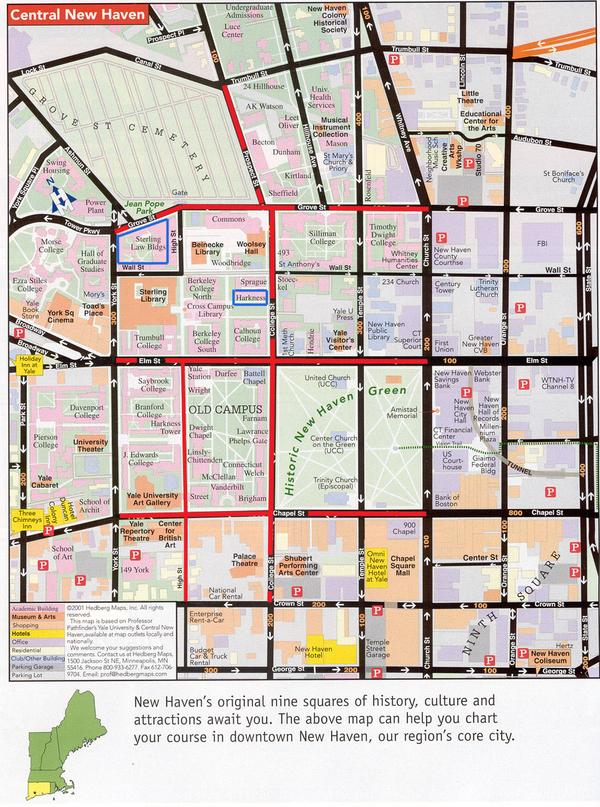
This past Friday night I spent my January 1st, like I often spend many nights, walking around downtown New Haven, Connecticut.
It's nothing new, as I said, I do this often: ditching the car on any one of the city's many streets, following eyes, nose and ears returning again having found whatever it was I was looking for that day.
I weave through block after block, down one-way streets and around corners, tracing the squares in the city's grid like a wayward pencil across graph paper.
There's Chapel Street, the Yale Rep to my left, York Street to the right. Edging past the Yale dormitories I'm occasionally warmed by the steamy, sweet-smelling run-off from the laundry rooms.
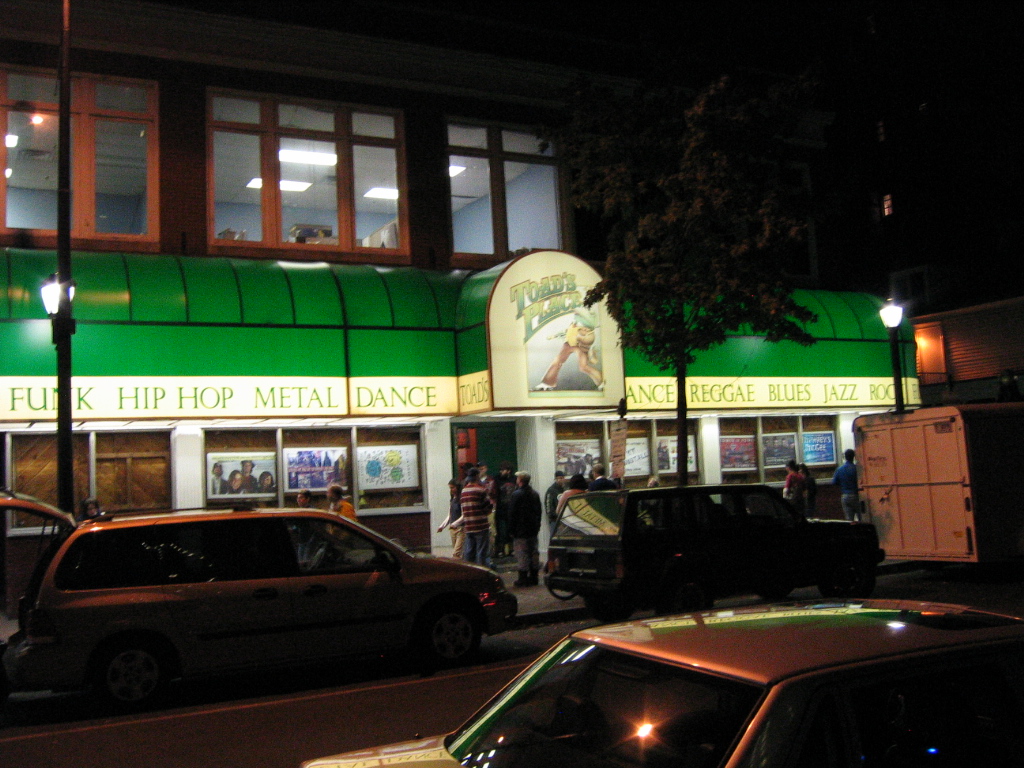
Out onto Broadway where students, and other pedestrians, homeless and non-homeless alike congregate in front of the lit thoroughfare where I spend my workday. Here one can, among other things, shop American, urban, organic or eat a smart hamburger. Farther down York I listen in on the drum-beats, baselines and solos echoing from Toad's Place, and beyond...
Friday, New Years, was of course dead; a blanket of black silence speckled with the iodized glow of street lights was all that greeted me on my circuit. Cafes and restaurants were naturally closed, the storefronts dark, and the Yale students and faculty that typically litter the streets were now gone, many having left in a dusty trail of completed exams, coffee cups, and old textbooks; the wake of an old semester.
I turn down High Street and make my way towards Chapel. A lone Starbucks on the corner provides the only light in a row of darkened buildings. It's moderately full inside and as I peer in, I catch a few vacant stares.
Ah. Forgive me. Monkey had to use the john, and the Organ grinder's in the shop, ya see...
I shuffle past a quiet Payne-Whitney Gym, deserted and dark save for a single orange light by the big, old wooden doors.
(Not the actual way in, which is like a long cave entrance off to the side, currently sheathed in blue construction tarp and scaffolding-an industrial alternative to Lewis Carroll)
Vertically plastered along the building's old bricks are pictures of various Yale athletes, male and female frozen forever in mid lay-up; slapshot; forehand; volley. Each has its own torch-like spotlight underneath it, and for a minute, as corny as it sounds I'm reminded of Greek ruins. A pantheon empty, save for the echoes of rubber sole's screech on parquet, the violent crash of torsos on hardened mats and the thud of racket balls, overpowered then by a ravenous Yale crowd, blood-drunk for Harvard red.
The windows of Audubon Street, the arts district of New Haven and daily a defiant fist-pump in the direction of anything under the Yale fine arts umbrella, are a dark void.
Standing at the end of Grove Street I listen to the steady thrush of traffic, peering out onto State at the broken line of bright headlights. I guess in some weird way it reminds me a river. A river slowly but surely murdering the ozone, but still, a river.
Wall Street is especially lonely. A kind of Sleepy Hollow that cuts under a stone archway and into part of the Yale campus at one end that is accessible only on foot, and with a student ID. The President of Yale parks his vehicle in a private garage down here. It's awfully small to accommodate anything I imagine him driving though, like a hover car powered by Dark-Matter, or at the very least an M1 Tank with a rabid bull-dog stamped on the side.
It's here that a strange feeling overtakes me. It's as though wind, the sand it blows down the cracked concrete, the dull honk of cars in the distance, and the dim electrical buzzing of the streetlights mingles with the steady beat of my own footsteps to produce some weird night time score.
I stop.
Old words written by Patrick Kavanaugh ebb and flow through my mind:
"On Pembroke Road,
Look out for my ghost-
Disheveled, with shoes untied..
Playing
Through the railings
With little children-
Whose children have long since
Died..."
Everything becomes so acute and internal then, the way it gets, I think, while under water. Time becomes fluid and for whatever space of that moment, I actually wonder if I'm still capable of speaking.
I take to walking more briskly now on Elm Street, around the perimeter of the New Haven Green, the blue fiber optics of the city's Christmas tree softly glowing toward its center.
I come eventually to the Quad-section out in front of Broadway that's divided by a commuter lot and am given the option to continue my current course, or take one of three new ones:
DIXWELL? WHALLEY? GOFFE?
The first three were Puritan judges. Elm, last I checked, was of course, a type of tree...
Choose your destiny...
Perhaps it's because it marks the transition away from Christmas and into that cold, grayish gulag that precedes Spring here in the Northeast. No longer the brightly lit, multi-colored gulag that inspires giving and peace on Earth, it is rather characterized by another set of grim sense experiences: blistering cold, a deadened landscape (at least in southern CT), eight hours of maximum sunlight, the abrasive screech of a rusted timing belt quiet enough to ignore in the warmer weather, and subsequent daydreams of the west coast.
It's the period our intrepid leaders in government tried to render a bit warmer by forming the uneasy pact with greeting card companies that resulted in the flop we know as Valentines Day. With little else to do, they took the only remaining logical measure, and turned seasonal authority over to more capable hands; thus scapegoating a little earth-dwelling rodent.
This past Friday night I spent my January 1st, like I often spend many nights, walking around downtown New Haven, Connecticut.
It's nothing new, as I said, I do this often: ditching the car on any one of the city's many streets, following eyes, nose and ears returning again having found whatever it was I was looking for that day.
I weave through block after block, down one-way streets and around corners, tracing the squares in the city's grid like a wayward pencil across graph paper.
There's Chapel Street, the Yale Rep to my left, York Street to the right. Edging past the Yale dormitories I'm occasionally warmed by the steamy, sweet-smelling run-off from the laundry rooms.
Out onto Broadway where students, and other pedestrians, homeless and non-homeless alike congregate in front of the lit thoroughfare where I spend my workday. Here one can, among other things, shop American, urban, organic or eat a smart hamburger. Farther down York I listen in on the drum-beats, baselines and solos echoing from Toad's Place, and beyond...
Friday, New Years, was of course dead; a blanket of black silence speckled with the iodized glow of street lights was all that greeted me on my circuit. Cafes and restaurants were naturally closed, the storefronts dark, and the Yale students and faculty that typically litter the streets were now gone, many having left in a dusty trail of completed exams, coffee cups, and old textbooks; the wake of an old semester.
I turn down High Street and make my way towards Chapel. A lone Starbucks on the corner provides the only light in a row of darkened buildings. It's moderately full inside and as I peer in, I catch a few vacant stares.
Ah. Forgive me. Monkey had to use the john, and the Organ grinder's in the shop, ya see...
I shuffle past a quiet Payne-Whitney Gym, deserted and dark save for a single orange light by the big, old wooden doors.
(Not the actual way in, which is like a long cave entrance off to the side, currently sheathed in blue construction tarp and scaffolding-an industrial alternative to Lewis Carroll)
Vertically plastered along the building's old bricks are pictures of various Yale athletes, male and female frozen forever in mid lay-up; slapshot; forehand; volley. Each has its own torch-like spotlight underneath it, and for a minute, as corny as it sounds I'm reminded of Greek ruins. A pantheon empty, save for the echoes of rubber sole's screech on parquet, the violent crash of torsos on hardened mats and the thud of racket balls, overpowered then by a ravenous Yale crowd, blood-drunk for Harvard red.
The windows of Audubon Street, the arts district of New Haven and daily a defiant fist-pump in the direction of anything under the Yale fine arts umbrella, are a dark void.
Standing at the end of Grove Street I listen to the steady thrush of traffic, peering out onto State at the broken line of bright headlights. I guess in some weird way it reminds me a river. A river slowly but surely murdering the ozone, but still, a river.
Wall Street is especially lonely. A kind of Sleepy Hollow that cuts under a stone archway and into part of the Yale campus at one end that is accessible only on foot, and with a student ID. The President of Yale parks his vehicle in a private garage down here. It's awfully small to accommodate anything I imagine him driving though, like a hover car powered by Dark-Matter, or at the very least an M1 Tank with a rabid bull-dog stamped on the side.
It's here that a strange feeling overtakes me. It's as though wind, the sand it blows down the cracked concrete, the dull honk of cars in the distance, and the dim electrical buzzing of the streetlights mingles with the steady beat of my own footsteps to produce some weird night time score.
I stop.
Old words written by Patrick Kavanaugh ebb and flow through my mind:
"On Pembroke Road,
Look out for my ghost-
Disheveled, with shoes untied..
Playing
Through the railings
With little children-
Whose children have long since
Died..."
Everything becomes so acute and internal then, the way it gets, I think, while under water. Time becomes fluid and for whatever space of that moment, I actually wonder if I'm still capable of speaking.
I take to walking more briskly now on Elm Street, around the perimeter of the New Haven Green, the blue fiber optics of the city's Christmas tree softly glowing toward its center.
I come eventually to the Quad-section out in front of Broadway that's divided by a commuter lot and am given the option to continue my current course, or take one of three new ones:
DIXWELL? WHALLEY? GOFFE?
The first three were Puritan judges. Elm, last I checked, was of course, a type of tree...
Choose your destiny...
Subscribe to:
Posts (Atom)